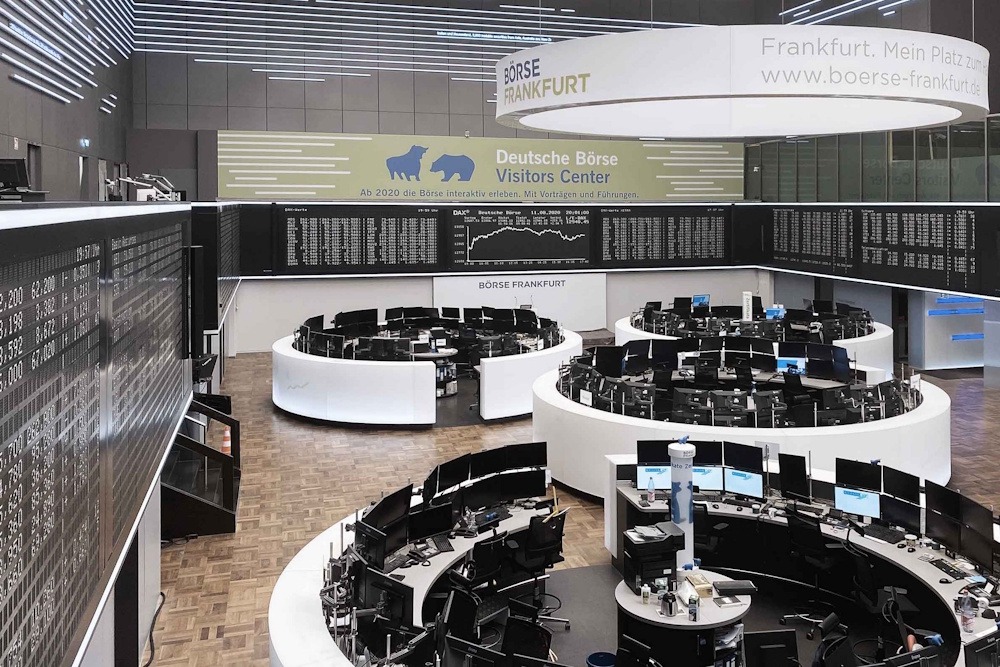
Following a lacklustre beginning, Germany’s equity benchmark DAX experienced a slight uptick on Monday morning, reflecting the measured approach of investors. Concerns regarding tensions in the Middle East and escalating crude oil prices have negatively impacted market sentiment. Brent crude futures experienced an increase of over 3% following the exchange of fire between Iran and the U.S. over the weekend, alongside Israeli troops capturing the strategic site of Beaufort Castle in southern Lebanon, marking the most significant incursion into the country in over 25 years. Israeli Prime Minister Benjamin Netanyahu characterised the capture of the strategic fortress as a ‘decisive shift’ in Israel’s campaign against Hezbollah. The benchmark DAX, which previously fell to 25,069.75, has risen by 86.08 points or 0.34% to reach 25,199.14 in recent moments. Amid optimism surrounding investments in artificial intelligence, the stock prices of technology firms experienced an upward trend.
- Infineon Technologies experienced an increase of nearly 3.5%, while SAP saw a rise of 2.3%.
- Commerzbank, Siemens Energy, RWE, Continental, BASF, and Siemens experienced gains ranging from 1% to 1.6%.
- Rheinmetall experienced a decline of 3.1%. Bayer experienced a decline of approximately 2.1%.
- Heidelberg Materials, Hannover RE, and Fresenius Medical Care experienced declines ranging from 1.7% to 1.9%.
- Qiagen, Zalando, Allianz, Fresenius, Munich RE, Siemens Healthineers, Symrise, GEA Group, Scout24, Merck, and Adidas experienced declines ranging from 0.5% to 1.2%.
Data indicated that Germany’s retail sales experienced a month-on-month decline of 0.3% in April 2026. This figure aligns with the downwardly revised contraction observed in the preceding month and surpasses market forecasts, which anticipated a 0.4% decrease. On an annual basis, retail sales decreased by 0.2%, following a downwardly revised decline of 0.2% in March. This trend suggests that consumer demand continues to be subdued, even in the context of easing inflationary pressures.
Data indicated that Germany’s S&P Global Manufacturing PMI was adjusted upward to 50.1 in May, compared to a preliminary figure of 49.9, suggesting a trend towards stabilisation in the manufacturing sector. Meanwhile, the final Manufacturing PMI reading for the eurozone in May registered at 51.6, a decline from April’s figure of 52.2.