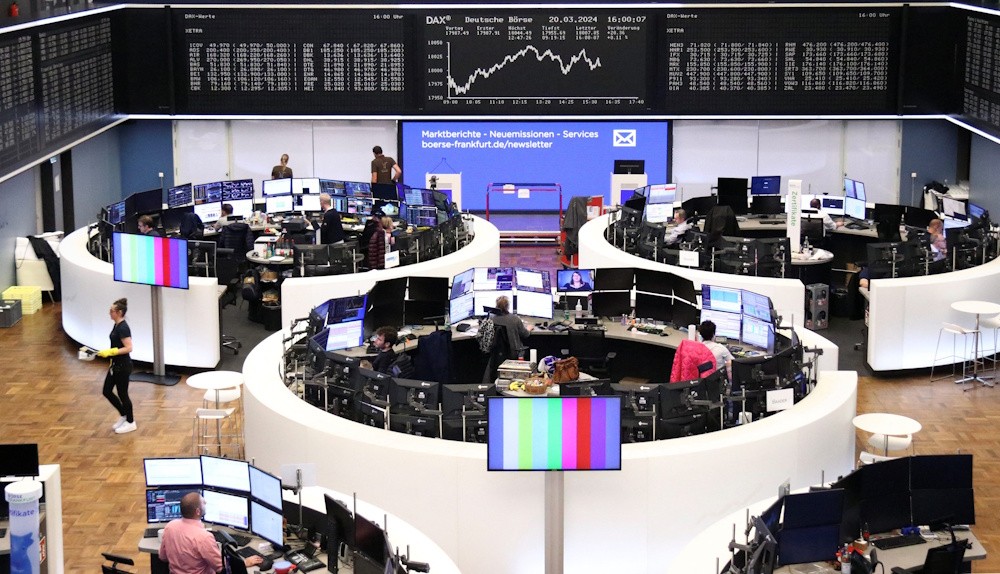
German stocks experienced a downturn on Tuesday, continuing the decline from the previous session. This drop was influenced by increasing oil prices and heightened political tensions in France and various other regions of Europe, prompting another wave of selling across multiple counters. Concerns regarding valuations associated with AI, coupled with data indicating a significant uptick Read More
Deutsche Bank
German stocks experienced a significant uptick in positive territory on Monday morning, building on gains from the prior session. This movement comes in the context of reduced geopolitical tensions following U.S. President Donald Trump’s remarks indicating that no military action against Iran would occur before the midterm elections in the U.S. Oil prices and easing Read More
A day after reaching a two-month low, Germany’s equity benchmark DAX experienced a robust rebound on Friday, as stocks strengthened, supported by remarks from U.S. President Donald Trump indicating that the U.S. will refrain from attacking Iran prior to the midterm elections next month. He also stated that discussions with Tehran “remain productive. Bond yields Read More
Despite data indicating an expansion in German industrial production, German stocks fell into negative territory Wednesday morning as oil prices and bond yields increased. Oil prices increased as a result of additional assaults on vessels in the Persian Gulf region. Brent crude front-month futures, which increased to $102.06 a barrel, were up by slightly more Read More
German stocks experienced an upward movement on Friday, supported by declining oil prices and reduced bond yields, as optimism grew regarding the potential reopening of the Strait of Hormuz within a week. Brent crude futures for the front-month contract declined to a low of $104.51 a barrel before recovering slightly to $105.24, reflecting a decrease Read More
On Wednesday, Frankfurt’s DAX 40 experienced a 0.3% increase, approaching 25,490, effectively breaking a two-session streak of losses. This uptick was attributed to the easing of oil prices and a decline in global bond yields, which provided a measure of relief. This occurred notwithstanding the persistent tensions in the Middle East. Meanwhile, attention shifted to Read More
The DAX 40 declined approximately 0.5% to roughly 25,300 on Tuesday, reaching its lowest point since July 24 and marking the second consecutive day of losses, primarily driven by the banking sector. This downturn was further exacerbated by elevated global bond yields and increasing oil prices. Deutsche Bank and Commerzbank experienced declines of 3.2% and Read More
The DAX 40 experienced a decline for the second consecutive session on Tuesday, decreasing by 0.3% to approximately 25,930, mirroring the performance of its European counterparts. Persistently elevated oil and gas prices, coupled with ongoing tensions in the Middle East, have intensified concerns regarding inflation in anticipation of this week’s European Central Bank meeting. The Read More
The DAX 40 continued to decline on the first trading day of September, dropping over 1% to approximately 25,980, a level not observed since late July. Rising oil prices and bond yields, coupled with escalating tensions in the Middle East, are exerting pressure on global markets. This situation has heightened concerns regarding a resurgence of Read More
The German stock market experienced a significant uptick on Friday, as investors primarily responded to earnings reports and monitored fluctuations in oil prices, influenced by the ongoing conflict in the Middle East. Investors are anticipating the important U.S. non-farm payroll data later today, seeking insights into the Federal Reserve’s potential interest rate adjustments. Brent crude Read More