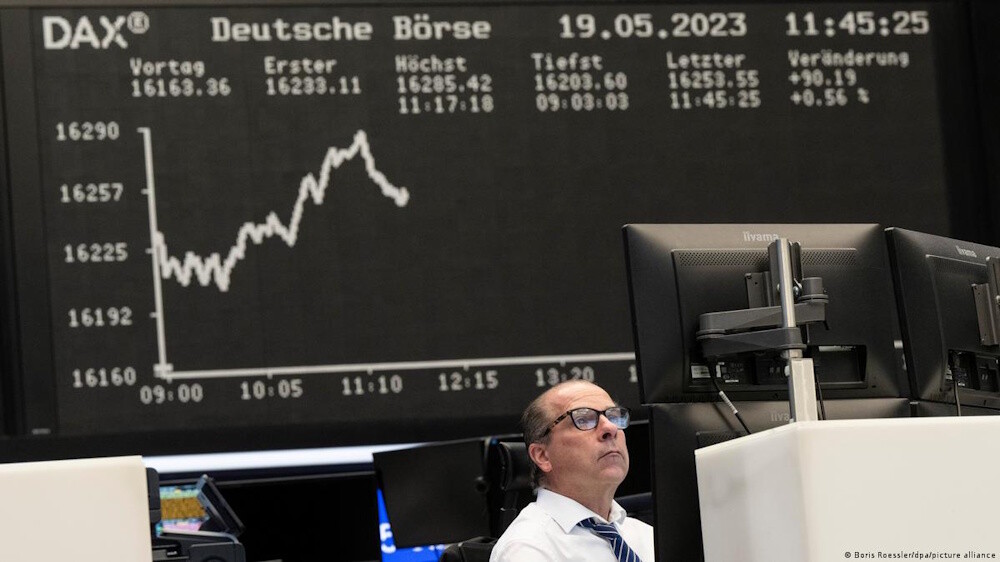
Germany’s equity benchmark DAX experienced a significant decline on Friday, as apprehensions regarding the sustainability of AI trade resurfaced, impacting the tech sector. This occurred despite Anthropic’s successful IPO offering and the stock’s impressive debut on Wall Street the previous day. Following a robust debut on Thursday, Anthropic shares experienced a decline in after-hours trading as the initial excitement surrounding its record IPO began to wane.
Concerns regarding inflation and the potential for an interest rate increase by the Federal Reserve, along with several other central banks in the near future, have also impacted sentiment. The DAX, continuing its downward trajectory for the sixth consecutive session, decreased by 417.74 points or 1.64%, reaching 25,081.17 just past the mid-morning hour. The index experienced a decline, reaching a low of 24,918.94 earlier in the session.
- Scout24, Infineon Technologies, and Siemens Energy experienced declines of 6%, 5.5%, and 5.4%, respectively. Hochtief declined by 4.3%, whereas Siemens, Deutsche Bank, and RWE experienced losses ranging from 3.1% to 3.7%.
- Deutsche Post, Commerzbank, Continental, MTU Aero Engines, Rheinmetall, Deutsche Boerse, SAP, BASF, Allianz, Daimler Truck Holding, Merck, Heidelberg Materials, Adidas, Gea Group, Bayer, Brenntag, and Zalando experienced declines ranging from 1% to 3%.
- Fresenius Medical Care experienced an increase of approximately 2.5%. Vonovia increased by 1.8%, whereas Hannover RE, Deutsche Telekom, and Beiersdorf experienced gains ranging from 0.8% to 1.1%. BMW and Munich RE recorded slight increases.
- Data released by Destatis indicated that Germany’s producer prices rose at the most rapid rate in over three years in October, driven by increasing costs of energy and intermediate goods.
Producer prices increased by 8.1% year-on-year in October, representing the most robust growth since February 2023. Economists had projected a price increase of 7.2% following an annual growth rate of 6.7% recorded in September. On a monthly basis, producer prices increased by 1.4%, surpassing the forecast of 0.9% made by economists. The annual increase in producer prices was primarily driven by the 18.7% surge in energy prices. The prices of intermediate goods experienced a significant increase, rising by 6.8%.