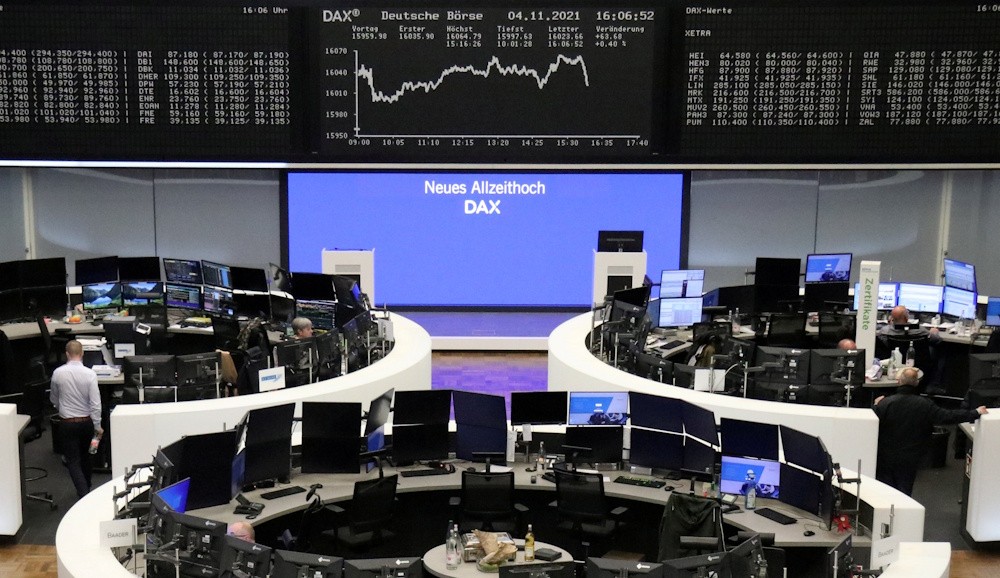
German equities are solidly in positive territory around midday on Friday, propelling the benchmark DAX to a level not seen in nearly seven weeks. The prevailing sentiment in the market appears to be somewhat bullish, driven by optimism regarding a potential resolution to the U.S.-Iran conflict in the near future.
Reports indicate that peace talks between the warring nations are expected to recommence this weekend. The DAX experienced an increase of 213.78 points, reflecting a rise of 0.89%, reaching a level of 24,364.32 recently.
- SAP experienced an increase of 3.75%.
- Deutsche Boerse experienced an increase of 2.7%, while Scout24 saw a rise of 2%.
- Beiersdorf, Deutsche Telekom, and Vonovia experienced increases of 1.5%, 1.4%, and 1.2%, respectively.
- Zalando, Symrise, Merck, MTU Aero Engines, Daimler Truck Holding, Infineon Technologies, Henkel, Hannover RE, Adidas, Rheinmetall, and Munich RE experienced moderate gains.
- Delivery Hero shares surged by 8.5% following Uber’s agreement to acquire an additional 4.5% stake in the German food delivery enterprise.
- Mercedes-Benz experienced a decline of over 4%.
- RWE experienced a decline of 2.2%, and E.ON saw a decrease of 1.4%.
- Meanwhile, Bayer, Heidelberg Materials, Fresenius, Siemens Energy, and Brenntag reported losses ranging from 0.6% to 1%.
Train manufacturer Alstom experienced a significant decline of 30% following the retraction of its medium-term forecast. Although it has rebounded from the intraday low, the stock remains down over 16% at this moment. In economic news, Eurozone exports experienced a decline for the second consecutive month in February, according to data. In February, exports experienced a decline of 6.7% compared to the same month last year, a deceleration from the 7.7% decrease observed in January.
In a similar vein, imports experienced a decline of 2.2% compared to the previous year, subsequent to a 7.8% reduction in January. The trade balance recorded a surplus of EUR 11.5 billion, indicating a significant enhancement from the EUR 1 billion deficit observed in January. In February, exports experienced a month-on-month growth of 0.9%, while imports saw an increase of 3.5%. As a result, the seasonally adjusted trade surplus decreased to EUR 7.0 billion, down from EUR 12.8 billion in January.