
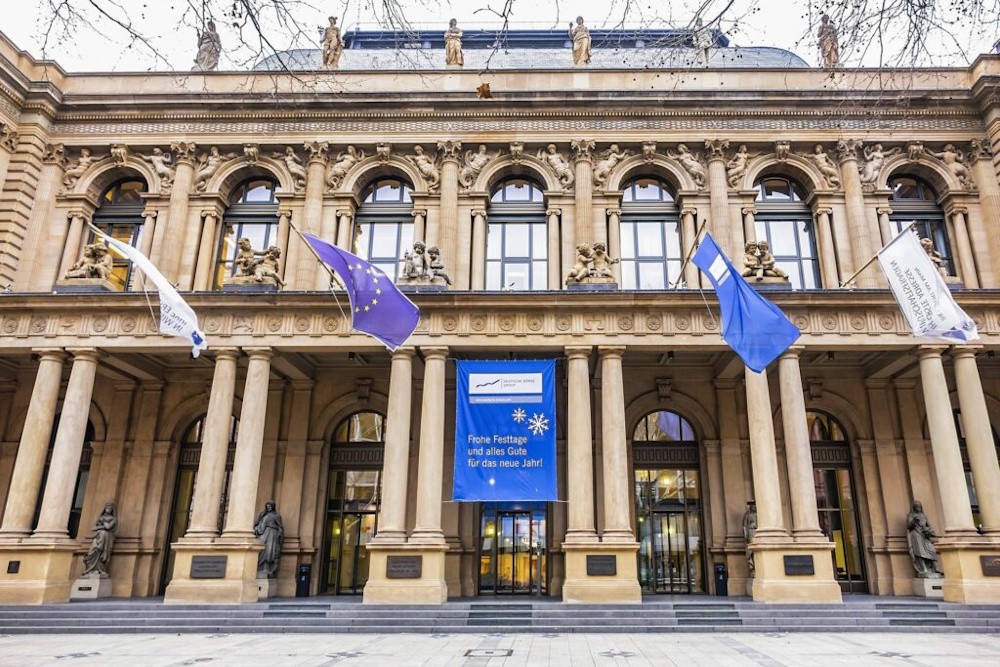
German stocks experienced a significant decline, with the benchmark DAX falling by more than 2.7% on Monday morning. This downturn is attributed to rising concerns regarding the potential economic repercussions stemming from the ongoing conflict in the Middle East, particularly in light of the coordinated strikes executed by the U.S. and Israel on Iran, alongside Iran’s retaliatory actions against U.S. bases throughout the region.
Concerns regarding inflation have reemerged as Brent crude prices surged more than 10%, reaching their peak since January 2025, driven by apprehensions over potential supply disruptions from the Middle East. Investors are currently analyzing the regional economic data alongside corporate news. Equities within the travel, leisure, and banking sectors have experienced significant declines. The DAX experienced a significant decline, dropping to 24,647.00 earlier in the session, and was recently down 456.67 points or 1.8% at 24,855.44.25312.11
- Deutsche Bank has experienced a decline of 4.2%, while Commerzbank has fallen by 3.7%.
- Continental, Daimler Truck Holding, Siemens, Zalando, BMW, and Volkswagen have experienced declines in the range of 3% to 3.5%.
- Rheinmetall is experiencing an increase of nearly 2%.
- Deutsche Bank has experienced an increase of 1.4%, whereas RWE has risen by 0.75%.
- Fresenius Medical Care and Munich Rueck have experienced a slight increase.
Porsche Automobil Holding, Heidelberg Materials, Henkel, Siemens Energy, MTU Aero Engines, Deutsche Post, Allianz, Infineon Technologies, Mercedes-Benz, Adidas, Gea Group, Bayer, and Merck have experienced declines in the range of 2% to 3%. Data revealed an unexpected decline in Germany’s retail sales for January. In January, retail sales experienced a decline of 0.9% month-on-month, contrasting with the revised increase of 1.2% observed in December. Sales were anticipated to hold steady.
Year-over-year, the growth rate in retail sales moderated to 1.2%, down from 2.5% recorded in December. Retail sales exhibited no change on a month-over-month basis, while reflecting a 2.5% increase compared to the same period last year. Data indicated that the manufacturing PMI in Germany rose to 50.90 points in February, up from 49.10 points in January of 2026.