
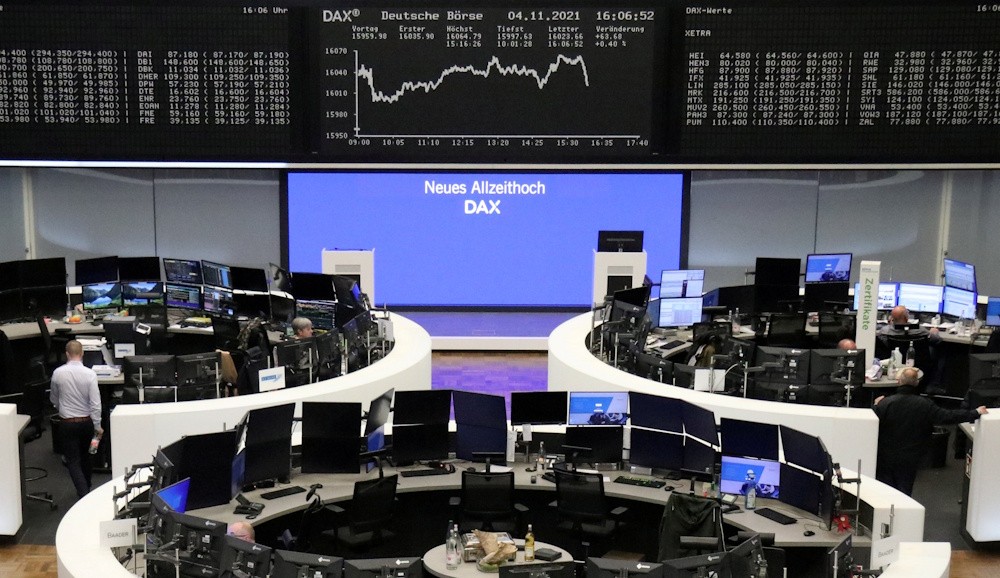
German stocks experienced a significant uptick Wednesday morning, as investors engaged in widespread purchasing activity in response to the announcement of a two-week ceasefire between Iran and the U.S. This development is anticipated to bolster stability in the vital energy corridor of the Gulf region. The ceasefire stipulates that Israel and Hezbollah must cease hostilities in Lebanon. Trump indicated that he was postponing his proposed strikes on Iranian bridges and power facilities.
Oil prices experienced a significant decline, as Brent crude futures for June fell nearly 14% to approximately $90 a barrel, driven by optimism regarding the potential resumption of oil and gas flows through the Strait of Hormuz. Germany’s benchmark index DAX, which surged about 5%, was up 1,067.07 points or 4.65% at 24,004.72 nearly half an hour before noon.
- Infineon Technologies experienced a remarkable increase of nearly 11%.
- Siemens Energy experienced a notable increase of 10.3%.
- Commerzbank, Heidelberg Materials, and Siemens experienced an increase of 9.5% to 10%.
- MTU Aero Engines, Continental, Vonovia, Zalando, Deutsche Bank, Daimler Truck Holding, Volkswagen, Adidas, SAP, Merck, Siemens Healthineers, and Porsche Automobil experienced gains ranging from 5% to 8%.
- BMW, Mercedes-Benz, Scout24, Deutsche Post, Beiersdorf, Henkel, Fresenius, Qiagen, Gea Group, Fresenius Medical Care, Allianz, Rheinmetall, Symrise, and Bayer experienced significant upward movement.
Shares of drug discovery and development company Evotec experienced a significant increase of nearly 10% following the release of full-year results that met market expectations. The company reaffirmed its earnings outlook. Deutsche Boerse experienced a decline exceeding 3%. Meanwhile, Brenntag, RWE, E.ON, BASF, and Hannover Rueck saw losses ranging from 0.8% to 1.7%. In recent economic developments, Germany’s construction sector experienced a deceleration in its contraction during March, while the escalation of conflict in the Middle East heightened cost pressures, according to survey findings.
The construction Purchasing Managers’ Index increased to 48.0 in March, up from 43.7 in February. Germany’s factory orders showed signs of recovery in February, though the pace was slower than anticipated, as indicated by data from Destatis, in the context of the impending conflict in Iran. Fueled by significant expansion in the automotive sector, factory orders increased by 0.9% month-over-month in February, a notable recovery from the 11.1% decrease observed in January. Orders were projected to increase by 3%.