
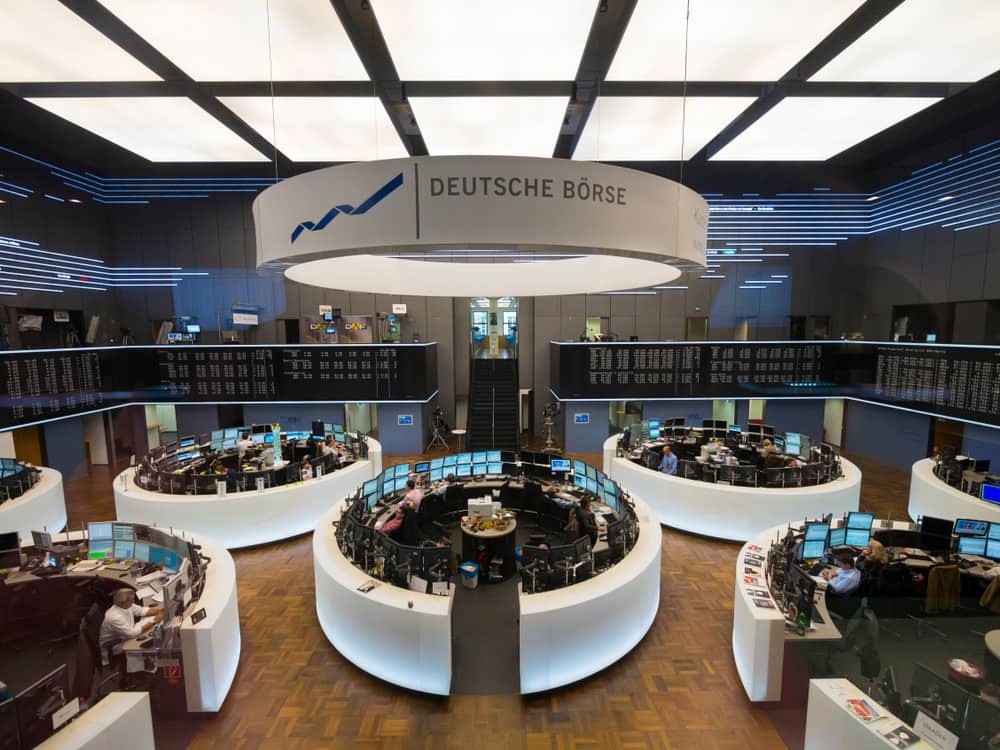
The DAX 40 index commenced trading on Thursday, March 19, 2026, with a significant decline of over 2.5%, falling beneath the 23,000-point threshold, marking its lowest level since May 2025. This represents the second consecutive session characterized by significant losses, primarily influenced by intensifying tensions in the Middle East that have impacted crucial energy infrastructure, raising concerns about a potential prolonged crisis in global energy supply. Confirmed market data indicates the DAX 40 at 22,863 points intraday, reflecting a decrease of 443 points or 1.88% at the open, with additional declines pushing it more than 2.5% lower. The catalyst is evident: recent assaults on energy infrastructure in the Middle East, coinciding with a heightened conflict involving Iran, have propelled Brent crude prices upward by 5.8% to $113.61 per barrel, while European natural gas prices have surged by 22.9% to 67.21 euros per megawatt hour. This energy shock poses a direct threat to Germany’s export-oriented economy, with industrials and chemicals constituting more than 30% of the index weighting.
For the DAX 40 specifically, this is significant as Germany continues to be Europe’s manufacturing powerhouse, with substantial exposure to energy-intensive sectors. Rising input costs are compressing margins for automotive manufacturers such as Volkswagen and BMW, as well as for chemical industry leaders BASF and Covestro, and machinery companies. The DAX’s focus on cyclicals intensifies the impact of such shocks, in contrast to the more diversified Euro Stoxx 50. Investors proficient in English who are monitoring Europe should take note of this divergence: whereas US benchmarks such as the S&P 500 futures experienced a modest decline of 0.2%, the significant drop in the DAX underscores specific vulnerabilities in the DACH region related to energy disruptions. Leading the decline, Vonovia SE experienced a drop of 8.7-9%, even as it reported a net profit of €4.19 billion for 2025, reversing a loss of €962 million from the previous year. The increase was primarily attributed to a €2.5 billion one-time tax windfall, rather than from core rental activities, leaving investors disheartened in their hopes for a recovery in Germany’s struggling property market. This single-stock movement impacted the index, given that real estate constitutes approximately 4% of the DAX 40. However, it highlights the wider sector vulnerability in the context of elevated ECB rates and increasing Bund yields.
The yield on the 10-year German Bund increased by 2 basis points to 2.97%, indicative of diminished safe-haven flows in the context of prevailing risk-off sentiment. For DAX investors, this intensifies pressure on rate-sensitive entities such as Vonovia, whose substantial debt burden heightens yield sensitivity. Interpretation: the earnings beat concealed fundamental weaknesses, leading to profit-taking and underscoring how isolated corporate developments can hasten index corrections in a fragile sentiment environment. Siemens Energy experienced a decline of 4.17-4.7%, Infineon Technologies saw a decrease of 3.63-4%, and Siemens recorded a drop of 3.4%, indicating a general downturn among the major players in the DAX index. The aforementioned entities account for more than 15% of the index, with semiconductors and energy technology notably susceptible to disruptions in the supply chain stemming from instability in the Middle East. Infineon’s chip exposure is closely linked to demand in the automotive and industrial sectors, both of which currently face risks stemming from elevated energy prices. The market breadth weakened, as the majority of sectors experienced declines. This situation does not reflect a widespread rally reversal; rather, it indicates a targeted selloff in cyclical sectors, juxtaposed with areas of strength in defensive sectors such as healthcare. In comparison to its counterparts, the DAX exhibited weaker performance relative to the CAC 40 (-1.1%) and FTSE 100 (-1.2%), trailing the Stoxx Europe 600 (-1.1%) as a result of its significant industrial orientation.
Over the course of four weeks, the index has experienced a decline of 9.1%, thus entering correction territory from its year-to-date peaks. The Federal Reserve maintained its interest rates on Wednesday, as Chair Jerome Powell pointed to an uncertain economic outlook influenced by the ramifications of the Iran war on both the economy and inflation. Markets currently anticipate a steady decision from the ECB today; however, a summer hike may be on the horizon if inflation driven by energy costs continues. For the DAX 40, the steady ECB rates provide no respite for exporters contending with a robust euro in the context of dollar depreciation. This policy stasis is significant for DAX valuations: persistently elevated rates exert pressure on multiples for growth names such as SAP and Siemens Healthineers, while providing a slight uplift to financials. Nonetheless, the dominant energy narrative eclipses the subtleties of monetary policy. DAX futures indicate ongoing pressure, as 45-week lows suggest a technical breakdown. The composition of the DAX 40, with 40% allocated to industrials, autos, and chemicals, renders it more susceptible to geopolitical energy risks compared to its US counterparts. Defensive stocks such as Bayer and Merck could provide some protection against declines; however, the extent of the rotation into these stocks is constrained during a market correction. The recent 0.16% decline over the past 12 months obscures year-to-date volatility; today’s movement reinforces the prevailing bearish momentum.
Investors who are English-speaking and hold DAX ETF positions, such as those offered by iShares or Lyxor, encounter heightened downside risk in comparison to the S&P 500, attributable to a reduced technology weighting of merely 10% as opposed to 30%. DACH focus: The Austrian and Swiss markets reflect the challenges faced by the DAX through interconnected export chains; however, Switzerland’s pharmaceutical sector provides a mitigating effect against these adversities. Immediate factors influencing the market include the European Central Bank’s announcement today and developments in the Middle East over the weekend. Upside risks appear constrained unless a de-escalation occurs; downside targets are set at 22,000 should crude exceed $120. Positioning: reduce exposure to cyclicals, focus on defensives. The decline of the DAX highlights Europe’s susceptibility to energy fluctuations, which is pertinent for global investment strategies that include German equities. Risks encompass an extended conflict that could lead to inflationary pressures on the Producer Price Index throughout Europe, adversely affecting the core of DAX manufacturing. A positive offset may occur if the ECB indicates a dovish stance, potentially leading to a favorable steepening of the yield curve for banks such as Deutsche Boerse.