
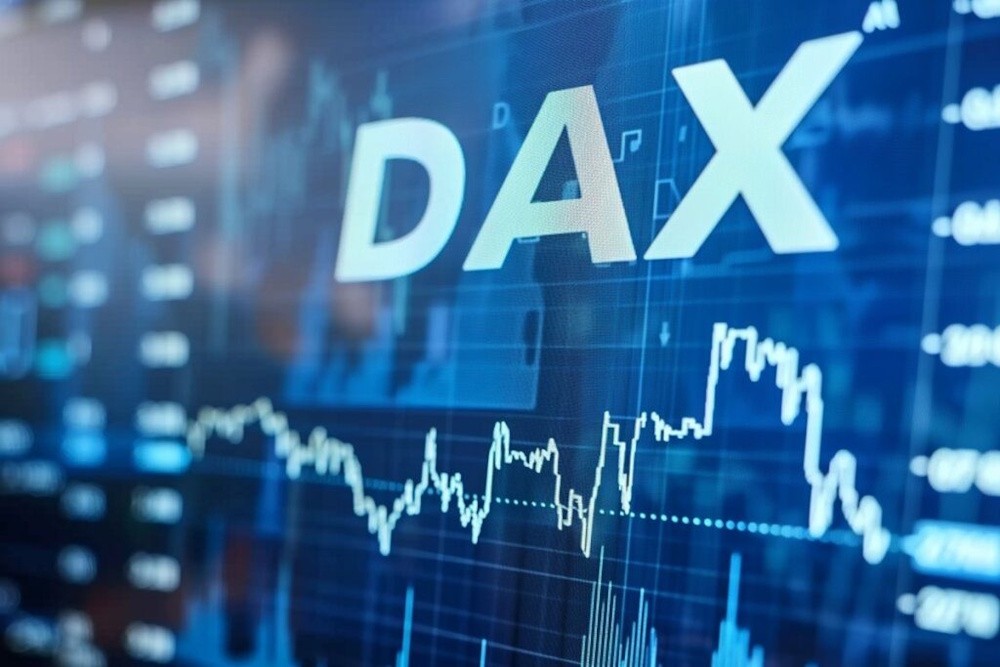
In the context of escalating tensions in the Middle East, German equities experienced an uptick on Wednesday, primarily driven by opportunistic buying following two consecutive days of significant downturns. The announcement by U.S. President Donald Trump regarding the U.S. Navy’s plan to escort oil tankers through the Strait of Hormuz aims to protect maritime trade in the Gulf and contribute to stabilizing rising global energy prices, which is providing a slight boost to market sentiment.
The U.S. Development Finance Corporation has affirmed its preparedness to provide political risk insurance and guarantees for energy shipments transiting through the Gulf. The benchmark DAX increased by 369.98 points, reflecting a rise of 1.56%, reaching 24,123.00 slightly past noon.
- Infineon Technologies has increased by 4.4%, while Daimler Truck Holding has risen by 4.2%.
- Rheinmetall, Siemens Energy, Siemens Healthineers, and Siemens have experienced an increase in value ranging from 2.3% to 2.5%.
- BASF, Deutsche Post, Munich RE, Henkel, Merck, Volkswagen, Allianz, Zalando, SAP, Hannover Rueck, Deutsche Bank, Mercedes-Benz, BMW, Porsche Automobil Holding, and Gea group are experiencing increases ranging from 1% to 2.2%.
- Adidas is experiencing a decline of 7.4% following the announcement of alterations to its supervisory board.
- Bayer is experiencing a decline of nearly 2%. Brenntag has experienced a decline of 1.1%.
- The German flavors and fragrances manufacturer Symrise has experienced a decline of 1.4% following its projection of a low single-digit decrease in organic sales for the first quarter.
Data indicated that the HCOB Germany Composite PMI was adjusted marginally upward to 53.2 in February 2026, compared to a preliminary figure of 53.1, and an increase from 52.1 in January. The latest figure represents the peak level in four months, driven by accelerated growth in both manufacturing and service sectors. The HCOB Germany Services PMI was adjusted upward to a four-month peak of 53.5 in February 2026, up from a preliminary estimate of 53.4, and in contrast to 52.4 recorded in January, according to final figures.
The HCOB Eurozone Composite PMI increased to 51.9 in February 2026, rising from 51.3 in January, indicating the most robust growth in private sector activity observed over the past three months. The HCOB Eurozone Services PMI rose to 51.9 in February of 2026, up from 51.6 in the prior month. This figure slightly surpassed the preliminary estimate of 51.8 and aligned with initial market expectations. In January 2026, industrial producer prices in the Euro Area experienced a month-over-month increase of 0.7%, effectively reversing the 0.3% decline observed in December and exceeding market expectations, which had anticipated a 0.2% rise. On an annual basis, producer prices experienced a decline of 2.1% compared to the previous year, following a 2.0% year-on-year decrease recorded in December.