
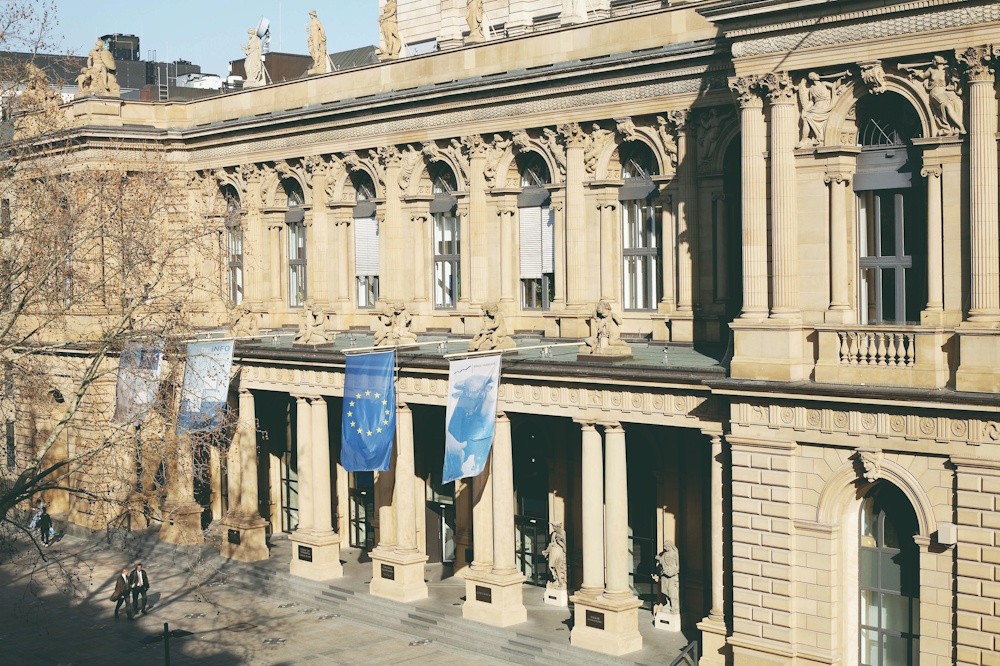
German stocks experienced a decline for the third consecutive session, reflecting a persistently bearish sentiment on Tuesday, driven by escalating geopolitical tensions and uncertainty surrounding tariffs. Equities from various sectors experienced notable declines, with the benchmark DAX retreating to a level not seen in nearly three weeks. The United States has deployed military aircraft to Pituffik Space Base in Greenland, leading Denmark to swiftly send its Army chief and troops to the Arctic Island, marking a significant escalation of tensions. In the realm of trade policy, U.S. President Donald Trump has signaled the potential for imposing 200% tariffs on French wine and Champagne, a response to Paris’s dismissal of his invitation to participate in the proposed Board of Peace initiative designed to address global conflicts. The French government stated that it “does not intend to answer favorably.”
The DAX experienced a decline, reaching a low of 25,544.64, and was down 381.30 points or 1.52% at 24,579.03 by midday. Within the DAX constituents, only Deutsche Bank and Qiagen exhibited gains, increasing by 0.5% and 0.2%, respectively, thus remaining in positive territory.
- Siemens Energy experienced a decline of 3.7%.
- Fresenius, Fresenius Medical Care, and Vonovia experienced declines ranging from 2.5% to 3%.
- Bayer, Infineon Technologies, and Heidelberg Materials experienced a decline of slightly more than 2%.
- Zalando, SAP, Porsche Automobil Holding, Volkswagen, Daimler Truck Holding, Siemens, Rheinmetall, GEA Group, RWE, Allianz, and Deutsche Bank experienced significant declines by midday.
In economic news, data indicated that Germany’s producer prices experienced a year-on-year decrease of 2.5% in December, a more pronounced decline compared to the 2.3% drop recorded in November. It was anticipated that prices would decline by 2.4%. Since March, there has been a downward trend in prices. In the latest monthly assessment, producer prices decreased by 0.2%, aligning with expectations, subsequent to a stagnant reading in November. In the entirety of 2025, producer prices experienced a decrease of 1.2%, in contrast to a decline of 1.8% recorded in 2024.
A report indicated that the current account surplus in the euro area experienced a significant decline in November, attributed to a decrease in the surplus from goods trade and an expansion of the primary income deficit. The seasonally and working-day-adjusted current account surplus decreased to EUR 9.0 billion, down from EUR 27.0 billion in October. During the corresponding period of the previous year, the surplus amounted to EUR 23.0 billion. The surplus in goods trade contracted to EUR 24 billion from EUR 33 billion in the preceding month, while the surplus in services fell to EUR 12 billion from EUR 13 billion.