
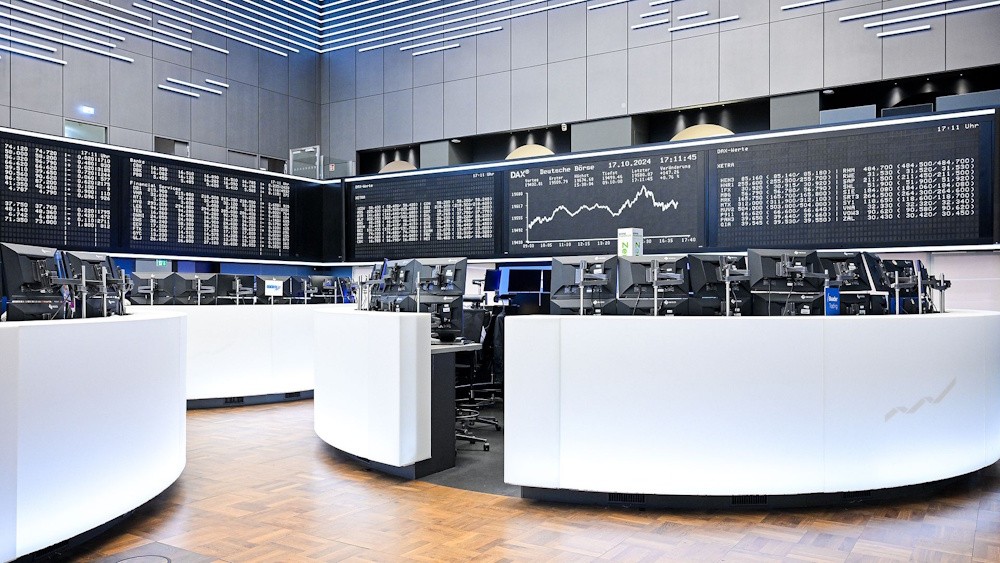
German equities exhibited a varied performance on Friday morning as market participants evaluated the monetary policy decisions of the European Central Bank and the Bank of England, alongside data indicating an unforeseen decline in U.S. price growth. Investors anticipated the core PCE index, which is widely considered the Federal Reserve’s favored measure of inflation, in conjunction with the report on existing home sales.
The benchmark DAX experienced a decline of 16.59 points, reflecting a decrease of 0.07%, standing at 24,180.41 shortly after noon.
- Heidelberg Materials experienced an increase exceeding 2%.
- RWE experienced an increase of 1.1%, whereas BMW, Munich RE, Bayer, Mercedes Benz, MTU Aero Engines, Commerzbank, Siemens Energy, and Alliance saw advancements ranging from 0.7% to 1%.
- Adidas experienced a gain of approximately 0.3%, rebounding from initial weakness.
- The stock experienced a decline earlier following Nike’s warning regarding subdued demand in China and increasing tariff pressures. However, Puma exhibited weakness, declining by approximately 0.7%.
- Deutsche Bank, SAP, Scout24, Deutsche Boerse, Henkel, Daimler Truck Holding, Continental, and GEA Group experienced declines ranging from 0.3% to 1%.
Monthly survey data indicates that German consumer confidence is poised to decline at the beginning of 2026, as escalating inflation concerns negatively impact income expectations and purchasing behavior. The forward-looking consumer confidence index declined to -26.9 in January, down from a revised -23.4 in December, falling short of the anticipated score of -23.0.
In December, there was a stagnation in economic expectations, accompanied by a decline in both income expectations and the willingness to purchase. The propensity to save experienced a notable increase of five points, reaching 18.7, marking the highest level since June 2008. Analysts anticipate that the German economy will grow by 1 percent or perhaps a fraction below that figure in 2026.